

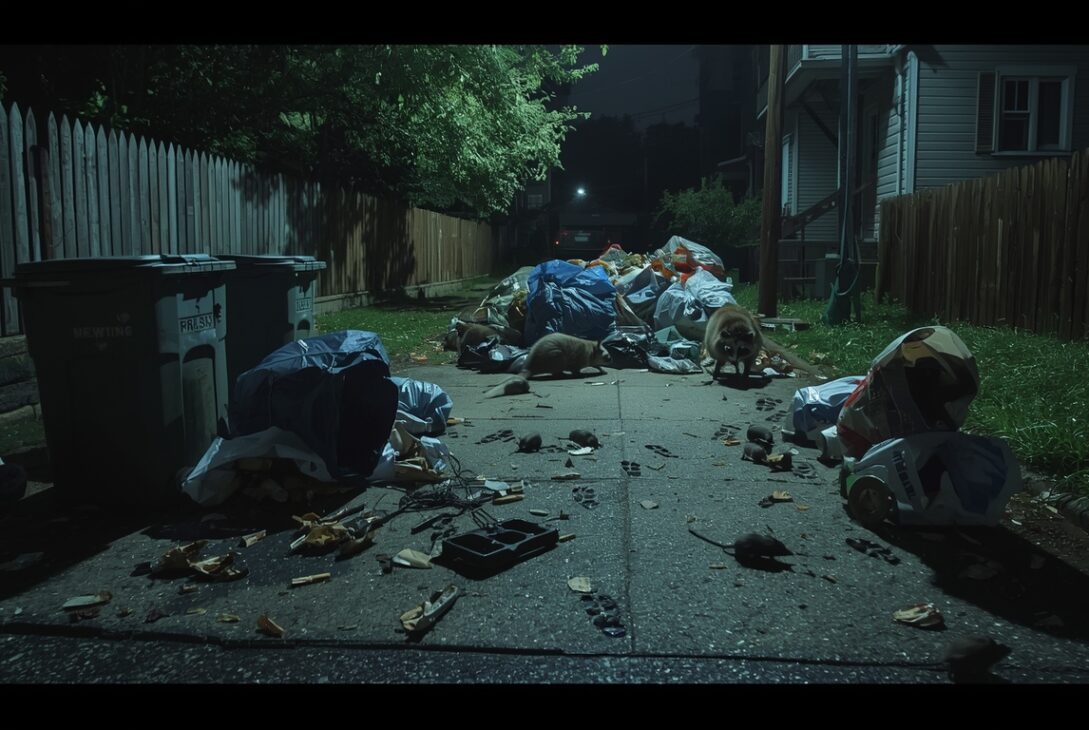
Homeowners in Kansas City, you empty the bins, and before the sun comes up, your outside bins look like a 24-hour buffet. Containers are thrown on the ground, rubbish is on the driveway, and strange footprints are scattered in all directions.
The real issue is bigger than the mess. Our outdoor trash here attracts wildlife and pests that pose health risks, cause property damage, and keep you awake at night. Although at least some Kansas City residents would like to believe the only culprits behind their urban woes are raccoons, the whole picture is far less straightforward.
If your trash area has become a recurring problem, pest control services from saelapest.com can help identify what is visiting and why it keeps coming back.
How Kansas City’s Weather Turns Trash Areas Into Year-Round Feeding Zones
The climate in Kansas City creates an ideal breeding ground for pest populations around outdoor trash. Eagle-eyed raccoons are ubiquitous, and hot, humid summers speed the decomposition of food, making garbage odors more appealing to thirsty animals. Winter temperatures are cold, but rarely drop so low that motivated scavengers are deterred.
Here is how each season impacts your trash area:
- Spring and Summer: High humidity speeds up the decomposition of trash, and the smell travels for blocks. Heat in the 80s and 90s makes dumpsters incubators for bacteria and odors, creating an aromatic, mouthwatering environment that attracts everything from flies to larger mammals.
- Fall: Those warm temperatures have pests on a foraging frenzy as they prepare for winter. They eat your garbage because natural food sources are becoming scarcer.
- Winter: Pest activity gaps caused by Kansas City’s unpredictable winter weather. As soon as the temperatures creep north of 40°, animals crawl out of their lairs to eat, and your trash bin is the easiest place to find food.
It’s Not Just Raccoons: The Full Pest Lineup Around KC Trash Areas
Step outside after dark to a part of Kansas City where people dump trash, and you might be shocked at what you find. Pests you might suspect are only masked bandits are part of the line-up.
Common visitors include:
- Opossums: These nighttime scavengers rip open bags with their claws and often scatter trash as they go. Feeding on meat leftovers and rotten food.
- Rats and mice: Both flourish in urban Kansas City neighborhoods, setting up shop around trash areas and accommodating 24/7 dining. A rat only needs a hole the size of a quarter to squeeze through.
- Stray cats and dogs: Starving strays scour alleys and suburbs, slashing bags of rubbish with claws that scatter refuse over gardens.
- Crows and seagulls: These clever birds have figured out the trash collection schedule, arriving early to pick through the available bags.
Why Kansas City Alleys Make Pest Problems Harder to Control
The historic alley system of Kansas City, established in neighborhoods like Midtown, Westport, and Hyde Park , adds unique pest control challenges. Kansas City has about 1,000 lane miles of alleys, many dating to the early 20th century, according to the city’s Public Works Department.
Inside the alleyway, the design also offers cover. A tall fence, dangling trees, and little lighting allow creatures to move between estates safely. Once pests get a habit in these back alleys, they are nigh impossible to break.
University of Missouri Extension research finds that Kansas City urban raccoons have home ranges of only 20 to 50 acres, indicating the same animals repeatedly return to your alley. Few all-you-can-eat food buffets are more attractive to local wildlife populations than alleys where neighbors’ trash, your trash, and dumpsters full of commercial waste are located.
When Trash-Related Pest Issues Signal a Larger Problem
Professional pest control companies are competent at evaluating the entire issue. When it comes to pest problems associated with trash, Saela Pest Control, which services the Kansas City metro area, takes an outward approach. They look for points of entry, harborages, and attractants that most homeowners overlook. Their technicians are trained to determine whether the issue is a neighborhood problem or one on your property.